Tuesday, 8 July 2014

Sunset over Piran, Slovenia


Across from Venice on the other side of the Adriatic is the Istria Peninsular in the shape of a heart, spanning about 120km from north (Trieste) to south (Pula) - or roughly the same distance from Venice to Ravenna, or New York to Philadelphia.  It begins from Italy's Trieste in the north, passing through Slovenia, with the huge chunk of the heart belonging to modern day Croatia.  Piran is an ancient Roman town in Slovenia close to the Croatian border.

It is quite the popular tourist destination nowadays.  Tourists are kept busy visiting the city wall and beautiful marina, the Municipal Palace, the breath-taking town square, and many other historic buildings and monuments.  Never straying far from music, this was also the birth town of the famous Italian violinist composer Giuseppe Tartini (1692 - 1770).  At that time Piran was part of the Venetian Republic so Italy lays its claim on his legacy, but Tartini was actually born into one of the most important aristocratic Piranian families.  The town square is dedicated to him with a statue of him holding what I can only assume is a Baroque violin bow (not a modern French bow).

The townsfolk had been fishermen since time immemorial, and it was incorporated into the Roman empire by 178BC.  The town's name probably came from the Greek word for red, or "pyrranos".  So named because of the red stones found in the area, which perhaps gave rise to many of the red houses found today.

To catch Piran on a quiet day would be seeing paradise: wandering through the narrow meandering streets, exploring many of the art galleries and shops, admiring the beautiful houses and medieval architecture, and, in my case, watching the sunset over the Adriatic.  It's hard to find a reason not to come back again.

Official travel guide: http://www.slovenia.info/?_ctg_kraji=2650

斯洛汶尼亞的 Piran 位於伊斯特里亞半島。這個向南伸展的半島由北面的意大利邊境城市 Trieste 開始,經過中部的斯洛汶尼亞,一直到最南尖端的克羅地亞小鎮 Piran。
 
Piran 是古羅馬時代的克羅地亞邊境,當天留下來的古城牆、莊嚴的皇宮、遊人不絶的中央廣場,以及其他歴史悠久的古建築及遺跡,都成為了今天無數遊人的目的地。這裏亦是著名意大利小提琴作曲家 Giuseppe Tartini (1692 - 1770) 的出生地。當 Giuseppe Tartini 出生的時候,Piran 是意大利的領土,但是他其實是生於一個當地顯赫的 Piranian 貴族家庭。現在,小鎮的中央廣場豎立了 Giuseppe Tartini 的銅像雕塑,我猜想他手裏所拿著的,是有別於現代法國琴弓的巴洛克時期小提琴琴弓。
 
Piran 自公元前178年起已歸屬古羅馬帝國,因此這個小鎮的名字有可能是源於古希臘文「pyrranos」,是紅色的意思,這亦符合了這一帶佈滿紅色石頭的景色。時至今天,這裏仍保有很多用這些紅色石頭建的小屋。
幸運的我在 Piran 享受了難得的不多遊人的一天。我在小鎮狹窄的小街道漫步,參觀這裏精緻的小商店及畫廊,欣賞了這裏無數的紅色小石屋及中古時期建築物,最後在這裏欣賞了無限美麗的日落,令我樂而忘返。
 
Piran 的官方旅遊網站:http://www.slovenia.info/?_ctg_kraji=2650


Graham's Late Bottled Vintage 2003

Label: Graham's Late Bottled Vintage Port 2003, bottled in 2009.

Strength: 20%

Tasting notes:
Colour - Deep matted ruby
Nose - Intense red fruits and jams
Palette - Medium body, soft tannins
Finish - A long and quiet aftertaste, almost no acidity, fragrant raspberry

An easy and well-balanced drink that would appeal particularly to wine drinkers.  Nothing stands out in particular, but this subdued quality is precisely its attraction.  A drink for anytime of the day.


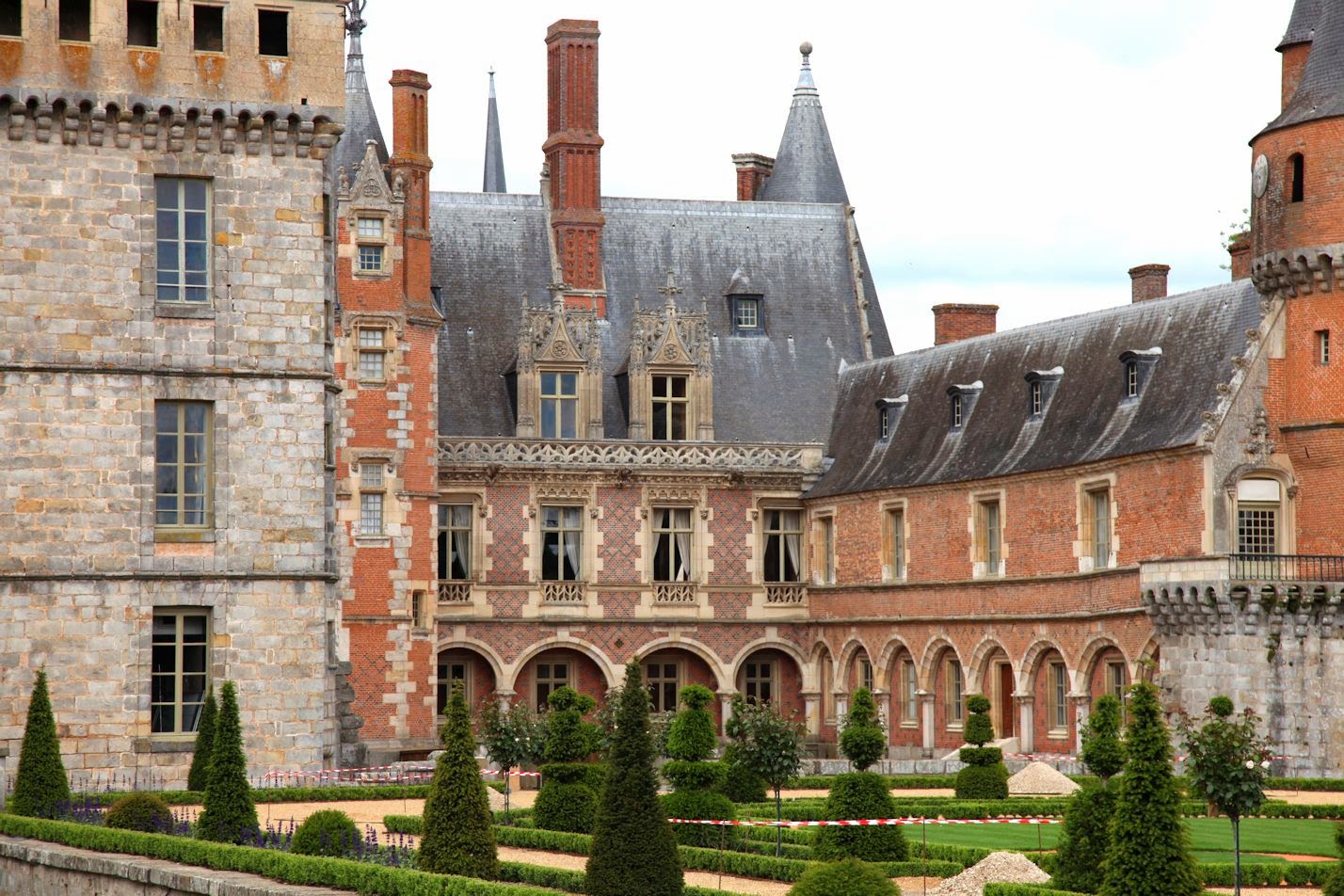
Chateau de Maintenon - slipping off the track from Chartres


Less than 90km southwest of Paris, or just 20 minutes from Chartres, is a village called Maintenon, made famous by its eponymous chateau. 

This belongs to the larger region of the Loire, or more specifically Loir-et-Eure, well known for its agricultural products, most notably wheat.  A whole route of the region (La Route du Blé) is drawn across wheat fields, much like wine-producing regions.  Without a doubt, the bake goods in this region are fantastic.

La Route du Blé passes through many distinct and less-visited towns, including Maintenon.  Two important attractions here: the chateau and the aqueduct. 

First built in the early 12th century, it passed through the hands of the Lords of Maintenon to the Finance Treasurer of Charles VIII to François d’Aubigné, second wife to Louis XIV. 

It was François d'Aubigné, later known as Madame Maintenon, who transformed the former medieval castle into the great manor house we see today.  Photographs are not allowed to be taken inside the apartments, and some of the rooms aren't as "touched up" as those in the Versailles.  Still, they afford glimpses into the luxuriousness of the chateau and they take you back to the glorious days of French Renaissance.  An impressive art collection and furniture are outfitted by the present owner, the Raindres. 

Perhaps as impressive as the chateau is the garden.  A vast expanse of green and 'tree-tunnels' spell out this French-style garden, as well as a structure that your eyes cannot miss: the aqueduct.  At the construction of the Versailles, some 60km away, there was a shortage of water for 1400 water fountains and lakes that are required to be running and flowing.  Water has to be brought in, and the water of the Loir was preferred by Louis XIV.  An aqueduct was proposed and construction began.  Parts of it passed through the Chateau de Maintenon, whose glory remains now adorns the garden.  The aqueduct was never finished, and the project was abandoned by 1695.  A lack of funding, perhaps; or did King Louis come to his senses that powering 1400 active water spectacle in his backyard is just ridiculous?

Official site: http://www.chateaudemaintenon.fr/
Also reachable by train from Chartres Station in just 22 minutes. 


Follina and its historic Abbey on the Prosecco route


The whole Veneto region in northern Italy is peppered with historical monuments of every epoch.  Set right in the middle of the Prosecco route, an hour north of Venice, is a small village called Follina.   Not only is this a quaint little pit-stop for travellers to rest between Prosecco tastings - there aren't any vineyards here, but the restaurants are particularly noteworthy - it boosts a treasured Italian National Monument, the Follina Abbey.

The town is set on a plain immediately in front of a huge mountain and there stood a monastic complex dating back to 12th century.  Very much in the look and feel of a Cistercian monastery (as in those most often seen in France and Northern Spain), with a cloister, stone pillars, wooden and tiled roof, a beautiful church constructed around the same period, all rich in metaphors and Christian symbolisms.  The Italian Inquisition of 1542 in these northern provinces no doubt put the future of the monastery in jeopardy, and its importance declined from then on until it was resettled by the Servite Order (or Servants of Mary) exactly 100 years ago, when it was finally declared a national monument by the Italian government.

This certainly is worth a stopover when you are in the region, perhaps even to stay a night in order to enjoy the restaurants.  Here is a wonderful guide written for (or by) students that you should bring along when visiting the Abbey: http://www.tronweb.it/sulle_tracce_dei_monaci/follina/descrizione_inglese

The Hotel Villa Abbazia is diagonally across the Abbey and offers limited terrace seating in its restaurant with a stunning view of the Abbey and the mountains. 


Saturday, 5 July 2014

Armagnac: Dartigalongue 1982

Label: Bas Armagnac, Dartigalongue 1982.  Maison Dartigalongue la plus ancienne du Bas Armagnac

Strength: 40%

Availability: Rare

Price: 62€ to 106€

A fifth generation distiller in the town of Nogaro, southeast of Bas Armagnac about 2 hours from Bordeaux, is the famed but small family-owned Armagnac maker Dartigalongue. 

Tasting notes:
Colour - Deep amber in the bottle; dark honey in the snifter with a rich patina. 
Nose - Complex nose of raw vanilla, toffee, sweet caramel, very faint hint of sherry oak. 
Palette - Medium bodied, various candied fruits, complimented by a pleasing anise flavour
Finish - More anise, smoked tannins, slightly acidic, a long finish.

An excellent digestive that is smooth and elegant, complex yet easy to drink.  The finish may be a little heavy on anise, but a left-over from the candied fruits on the palette makes a very desirable and mature after-taste.