Ernest So is a concert pianist who appears regularly in recitals across Europe, Asia, the US, Australia, and the Middle East. He is a lover of history, an avid traveler, collector, gastronome, and an all-round bon vivant. With an aching knack for the obscure, he actively seeks out unique travel experiences, which he will share with you in this blog.
Showing posts with label China. Show all posts
Saturday, 16 August 2014
Qingyang Guzhen (青岩古镇), southwestern China
Qingyang Guzhen (青岩古镇), roughly translates to Old Town of Qingyang, is one of most important old towns preserved in the province of Guizhou in southwestern China. Built in mid-14th century, it began as a military stronghold, but soon attracted a group of intelligentsias and craftsmen who shaped much of the culture as seen today. In modern history, it was an important command post of the communist army, as well
Tuesday, 4 February 2014
School building project in Guizhou, China (Part II)
Continuing from Part I, the next mission of my journey was to survey a few sites where we will build our next primary schools. Our charity organization, AKH Love and Care, has already built over 30 schools in rural China and we are primarily known as a charity that channels every donation dollar to the cause. These trips to China were all self-funded. Nothing comes out of the donation purse except to fund the building and scholarship. Period.
Today we visited the village of Naye (纳夜镇), which is actually a conglomerate of 38 villages spread over the mountain ranges. We visited the village of Kafa (卡法村) at the top of the mountain, where an old primary was already in existence but conditions were so bad even by Chinese standard, as one local journalist observed. Water supply is a huge problem here, and we are now building a pipeline that connects to a natural spring some distance away.
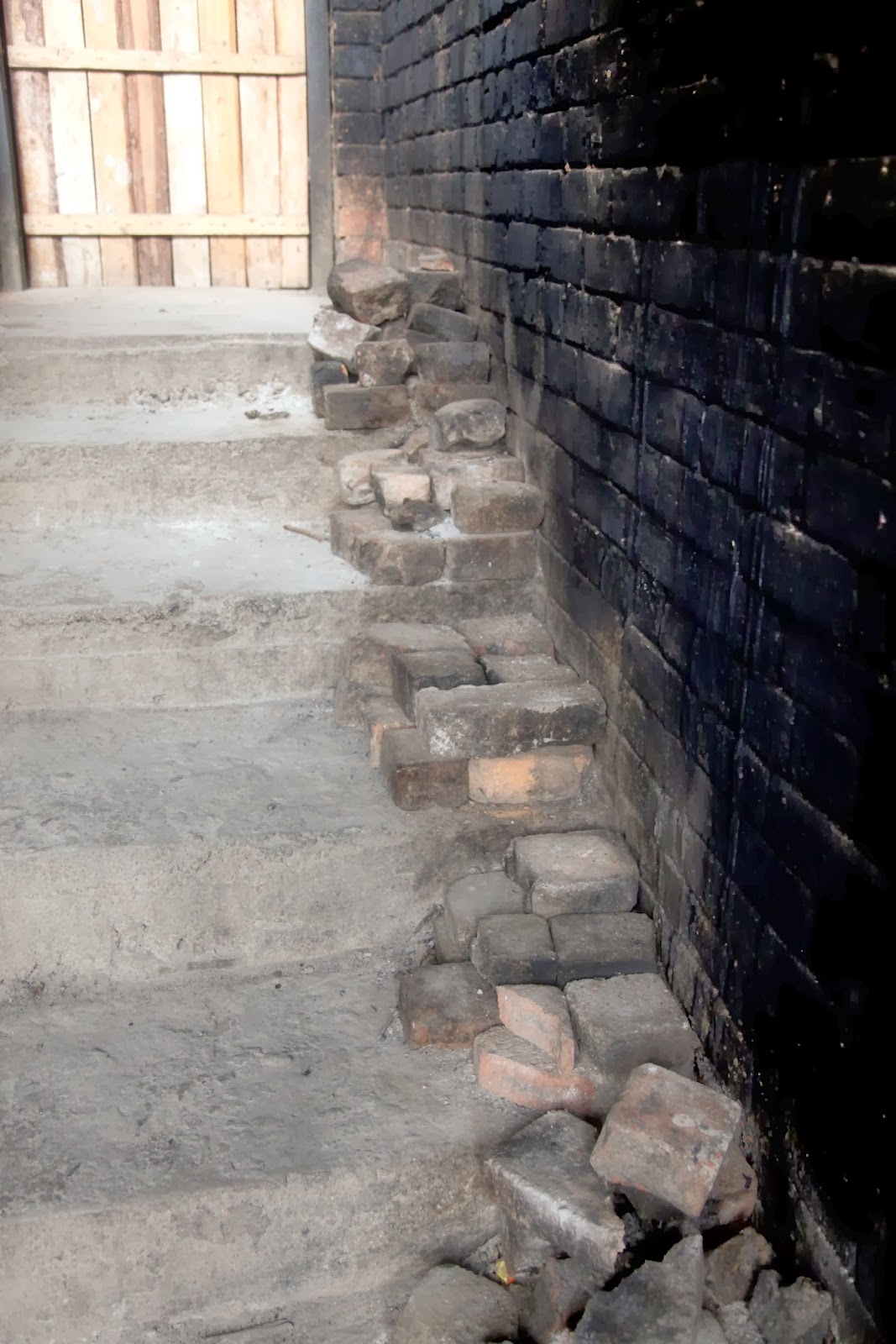
A lot of the students live in the other 37 villages across the mountains, so one of the bigger family homes was offered as student dormitory. The conditions were, however, as bad as can be imagined: about 30 students cramped into a room with only one light bulb, and the stairs are lined with make-shift stoves that they use to make their dinners.
Since we're on the subject of dinner ... The village chieftain was anxious to get our vote, so a luxurious feast was prepared by the local Robuchon, a menu that included dog stew, dog sausages, stuffed dog intestines, minced dog, wild greens, tofu, and wild corn. Realizing that I was traveling with three Englishmen who usually address dogs by pet names and not as dishes, they offered to pick better (and more digestible) corn for us - which we declined but they insisted - and the better ones were still tougher than straw. It however gave us a very good idea how these people live, and even though I am penning a Michelin review now we uttered not a word of complaint then. We were actually more than thankful that they laid out more food for us than they'd seen in a year.
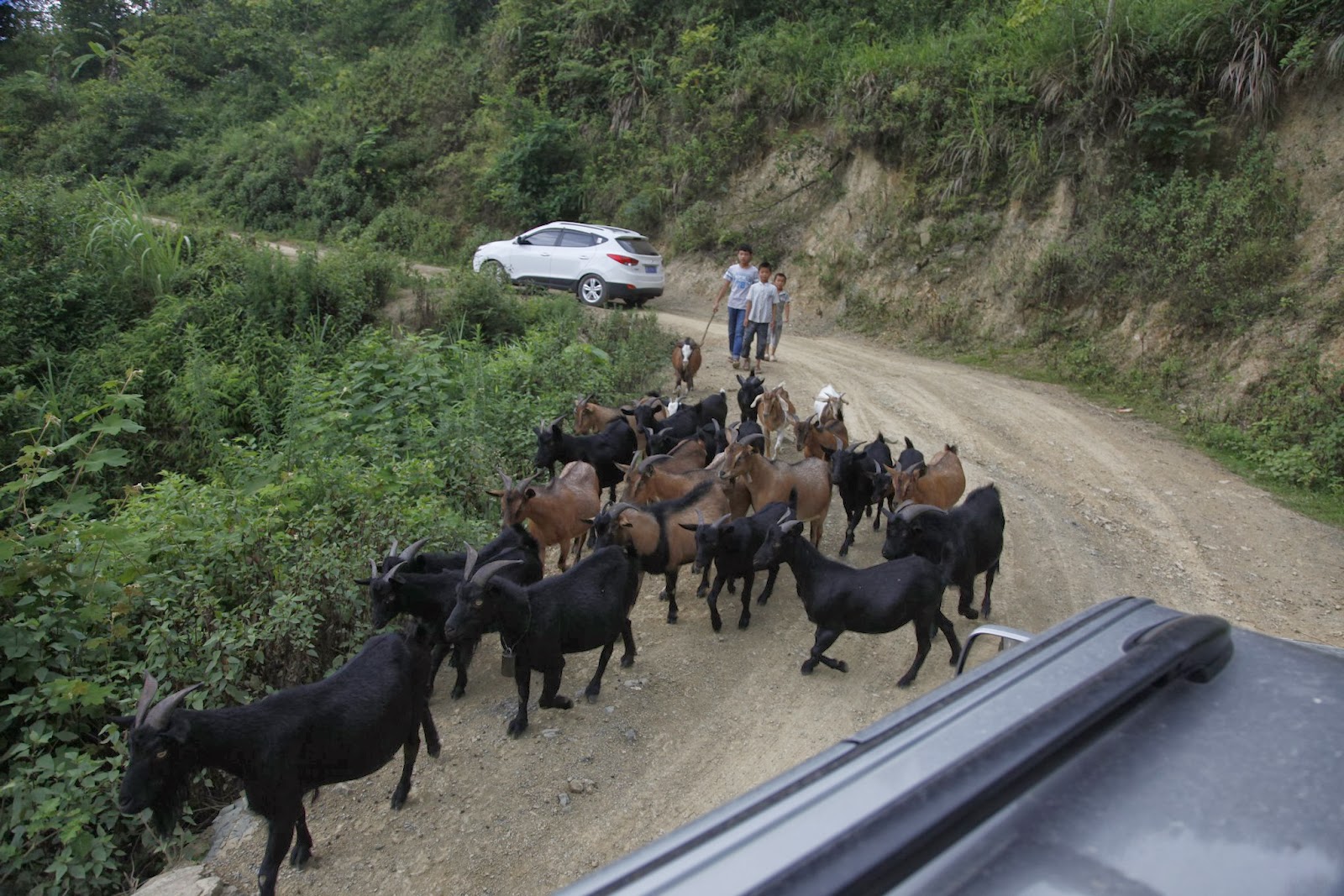
As mentioned in Part I, there weren't enough 4x4 for our group so my "seat" was at the back of the pickup truck, which suits me fine, except for 11km of yet-to-be-paved winding mountain track.
These are the stoves that the student built out of bricks. Each kid will occupy one flight of stairs and cook their dinner.
The Buyi people and their signature blue cloth. They don't speak mandarin. The Buyi language was actually similar to Tibetan at one point, until they split into two different languages some 900 years ago.
Update: a new school is being built now, scheduled for completion in summer 2014. The water pipe should be completed around February.
Location:
Wangmo, Qianxinan, Guizhou, China
Monday, 3 February 2014
Visiting schools in Guizhou, China (Part I)
I have the privilege of serving as an Executive Member of a very successful charity association in Hong Kong, the Au Kim Hung Love and Care. We raise funds from a wide range of sources and channel every single dime and nickel towards building primary and secondary schools in very, very impoverish parts of rural China. It's all about keeping the human equilibrium: using our first-world successes to help solve some third-world problems.
The problem of rural China is distance. Looking at the map China is about the same size as the USA, and yet comparatively rural China can be exceedingly remote - and I don't mean just slow-broadband-connections or an-hour's-drive-from-Denny's: these villages are often built deep into the mountains, with little access to stable and clean water supply, and villagers farm with medieval technology. Toilet flushing has not been invented, even rice is a luxury (corn is easier to grow as rice needs irrigated farmlands).
We have built 31 schools to date. This trip to Guizhou, China, was to check on two schools we built back in 2008 and to survey new sites. We needed 4x4 pickup trucks and jeeps to take us up the mountains (where they'd usually walk), over unpaved dirt tracks. As the local government could only supply a limited number of vehicles, I ended up standing at the back of one pickup truck....
I start with the journey to the two schools we built in 2008. We started from Wangmo County of Guizhou, which was 270km (180 miles) from Guiyang airport. In Europe or the US, you can easily cover 270km in under three hours, but this journey took us over 6 hours.
I don't suppose there is a market for Iams here in China: here's a happy dog chewing on a piece of knuckle bone after we've had our pork knuckle noodles.
These are signs put up by the government encouraging the one-child policy and discouraging abortion - a practice normally done when the child is confirmed to be a girl. There are signs like these in almost every village. Some of them are even quite graphic....
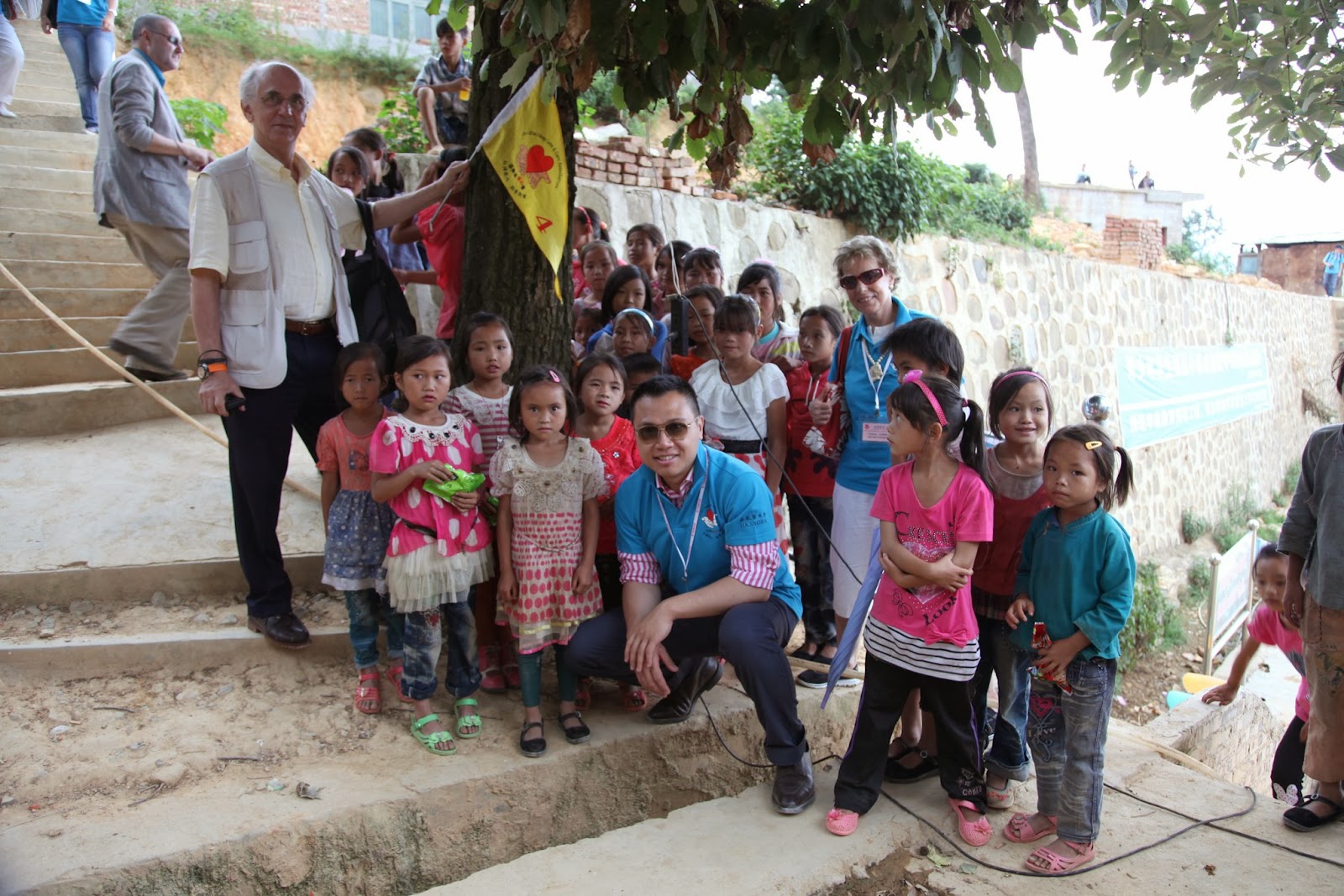
These are the lucky kids who have had a school to go to these past few years!
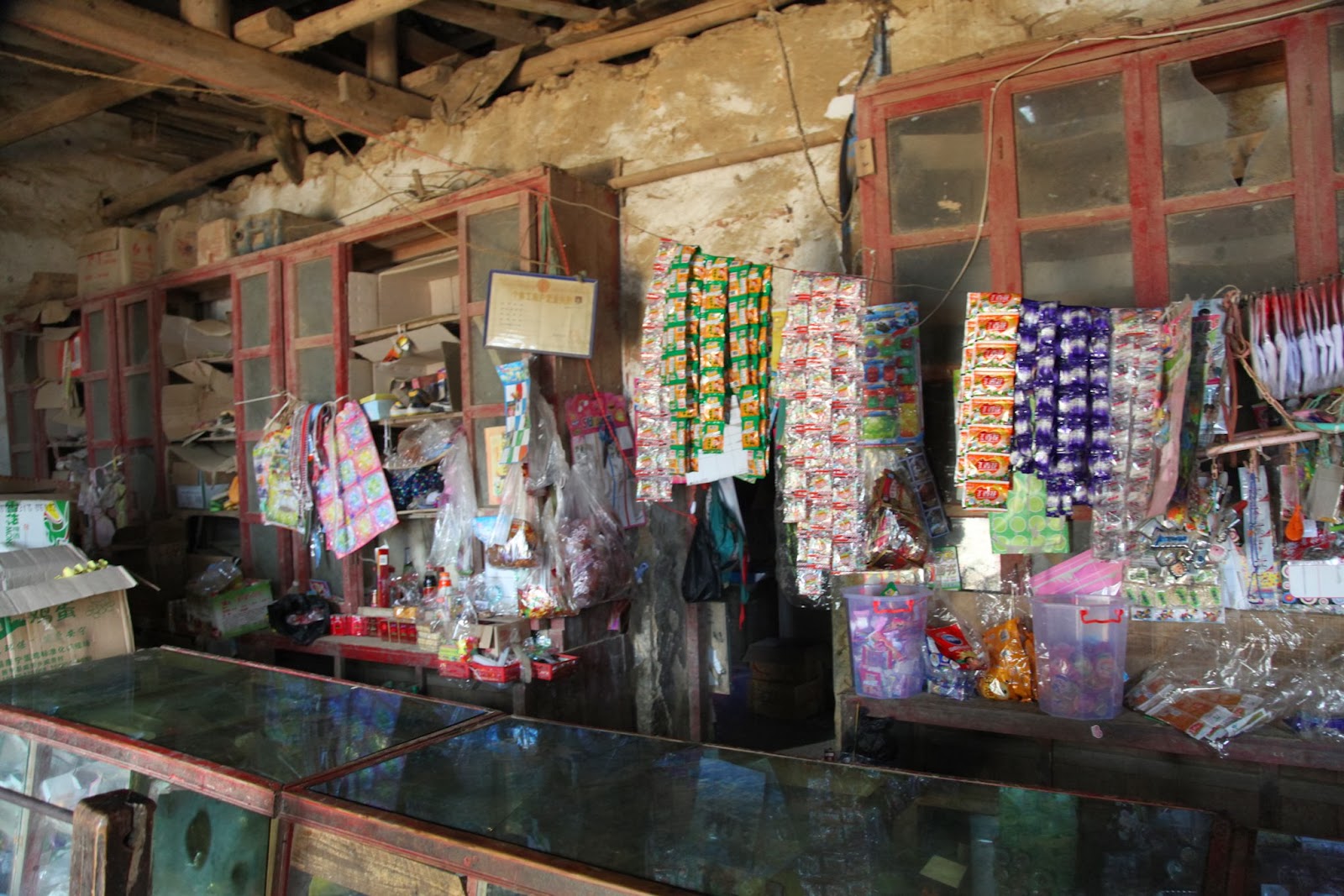
The local Walmart
No recollection what animal was on the menu that afternoon. I just had a feeling I had seen him not too long ago.
These people belong to a minority called Buyi (or Bouyei, 布依族). They have their own language and they don't speak a word of Mandarin. We were trying the teach them English; they'd no doubt be the first bilingual Buyi/English people.
What's not seen in this picture:
the kid's pants have a hole at the back (an easy solution to soiled clothing) and my forearm is now rubbing against something very smooth and slightly moist ....
Wangmo County:
The names of the schools are Xinping Primary School 新坪小學 and Bayou Primary School 岜油小學.
(To be continued ...)
Location:
Guizhou, China
Subscribe to:
Posts (Atom)