
Showing posts with label UK. Show all posts
Showing posts with label UK. Show all posts
Tuesday, 16 December 2014
Harking back to a bygone age - recital at the 1901 Arts Club, London

Monday, 14 July 2014
Bibury - 'the most beautiful village in England'

One of the prettiest parts of England is the Cotswold, referring the southwest of central England, roughly where Oxford is. During the Middle Ages, this region was well-known for its weavers and artisans, whose wealth contributed to countless churches and manor houses being built throughout the fertile land, many of those are preserved and have remained as important landmarks.
Bibury, about 2 hours west of London, is a small village in the Cotswold that has caught the attention of visitors from near and far. The poet and writer William Morris, who struck gold with his textile designs, visited Bibury and reportedly deemed it the most beautiful village in England. What captures the hearts of every visitor is the row of stone houses on Arlington Row, where weavers used to dry their cloths after washing them in the river. The steeply pitched roof is a common sight in the Cotswold, and this charming town has since become a great introduction to the region for travellers.
Due to its fame it can get pretty crowded with tourists, particularly Asians. It is nevertheless a beautiful spot to take a stroll, or to visit the trout farm nearby.
More information about activities in Bibury: http://www.bibury.com/
Cotswold 是英國其中一個最漂亮的地區,位於英格蘭的中區西南部,
Bibury 是 Cotswold 地區其中的一條小村莊,距離倫敦西正大概兩小時的車程,
由於 Bibury 有著很高的世界知名度,


Wednesday, 19 March 2014
Fountains Abbey - the largest and best preserved monastery in England
 Yorkshire is often associated with fantastic fish and chips and its beautiful coastline, but a short distance inland and seated right about Leeds is one of the largest and best preserved monasteries in England, the Fountains Abbey.
Tucked inside a vast royal park is the ruins of a 12th century monastery. Also listed as an UNESCO Heritage Site, the ruin now lends an elegant and romantic aura for those who venture into this massive stone structure. For the locals, this must have been an architecture of power, a pink sandstone structure rising out of the landscape and framed by a never-ending expanse of green.
Like the Lacock Abbey, Fountains Abbey was disbanded in 1539 by Henry VIII. It followed a downward route into deterioration, and became a stone quarry for the nearby towns of Ripon and York. It wasn't until the 18th century when it became one of the most treasured monuments of England.
After going through the state-of-the-art visitors' centre (and getting your tickets), you are immediately greeted by acres of woodlands with the Abbey tower looming at a distance. As one approaches the Abbey via a steep path through the woods, the gigantic stone structure comes plainly into view - what a humbling sight for the viewer. The façade of the church still stands, very much in the French Cistercian manner; while the Great Cloister corridor stretches to the right. There are few sights more magnificent than this.
Much around the inner cloister court is in ruin and it is hard to imagine the tranquil refuge that it once was. Even more dilapidated was the Abbot's House at the back of the Abbey (which extends to the royal park) - here, only a few foundation stones are left. The river Skell flows rapidly nearby, which must have served the monks both as a water source and a natural sewage system.
The visit ends with an idyllic walk over to the Studley Royal Water Garden and a deer park.
Getting there:
It is 2 hours by train from London King's Cross to York, after that it is about an hour's drive through the beautiful Yorkshire countryside. Buy early to score a cheap First Class seat which includes breakfast (or a light meal).
Official information on National Trust: http://www.nationaltrust.org.uk/fountains-abbey/


Tuesday, 18 March 2014
Lacock, an historical village in the heart of England
 The historical village of Lacock is where the 785-year-old Lacock Abbey is located. According to National Trust, most of the buildings in the village are now under active preservation, and since this is not London the village is safe from massive tourist invasion. Few villages are as well preserved as this.
After a simple yet delicious lunch, we took a slow walk around the village of Lacock and soaked in the idyllic surrounding. Half timbered houses, beautiful gardens, historic buildings, and an impressive church sprawled across the few roads that made up the village. The old barn house is now a museum, exhibiting the history of photography with a display of the first photo produced by a negative - invented in 1839 by Fox Talbot, who then lived at the Lacock Abbey.
In popular culture, the village was featured in Harry Potter movies as well as the 1995 production of Pride and Prejudice.
Not a bad way to spend an afternoon!
Free parking available next to the Abbey. 100 miles west of London, or around 40 minutes' drive from Bristol.
Official website on National Trust - https://www.nationaltrust.org.uk/lacock/
On Lacock Abbey and surround woodlands - http://ernestso.blogspot.co.uk/2014/03/785-year-old-lacock-abbey-in-wiltshire.html


785-year-old Lacock Abbey in Wiltshire, England
Set in the historic village of Lacock, the Abbey was founded in 1229, some 785 years ago. It began first as a nunnery, founded by Lady Ela the Countess of Salisbury whose husband was the illegitimate child of King Henry II. When Henry VIII disbanded all monasteries in England in 1536, the Abbey was sold for £783 to Sir William Sharington, who then converted it into his private home. By 18th century the Talbot family came into ownership, where 3 generations later the famous William Henry Fox Talbot lived - the same Talbot who invented photographic negative in 1839. His first photograph is now on displayed at the Fox Talbot museum next to the Lacock Abbey/House.
The impressive Abbey stands in the heart of an expansive woodland ground. Some of the interior still retain blocks of the original limestone. The cloister is airy and well lit, though not exceptionally big. In one of the rooms the original floor tiles are preserved. Several aspects of the outer wall and tower resonate with the Italian Renaissance, no doubt a reflection of Sir William Sharington's extensive travels. At the front entrance is a Gothic entrance hall that would certainly not have belonged to the original Abbey - it was the work of the last owner, John Ivory Talbot in the 18th century. Two of the Harry Potter movies were shot inside the Abbey!
The Abbey is a stunning construction set in the idyllic English countryside where one would least expect. While it is a pastiche of various architectural style seemingly joint together without much coherence, each piece represents and preserves a part of the history of this delightful building.
Less than 2 hours' drive from London or 40 minutes from Bristol, the Abbey and the village made for a perfect way to spend an afternoon.
About the village - http://ernestso.blogspot.co.uk/2014/03/lacock-historical-village-in-heart-of.html
On National Trust - https://www.nationaltrust.org.uk/lacock/


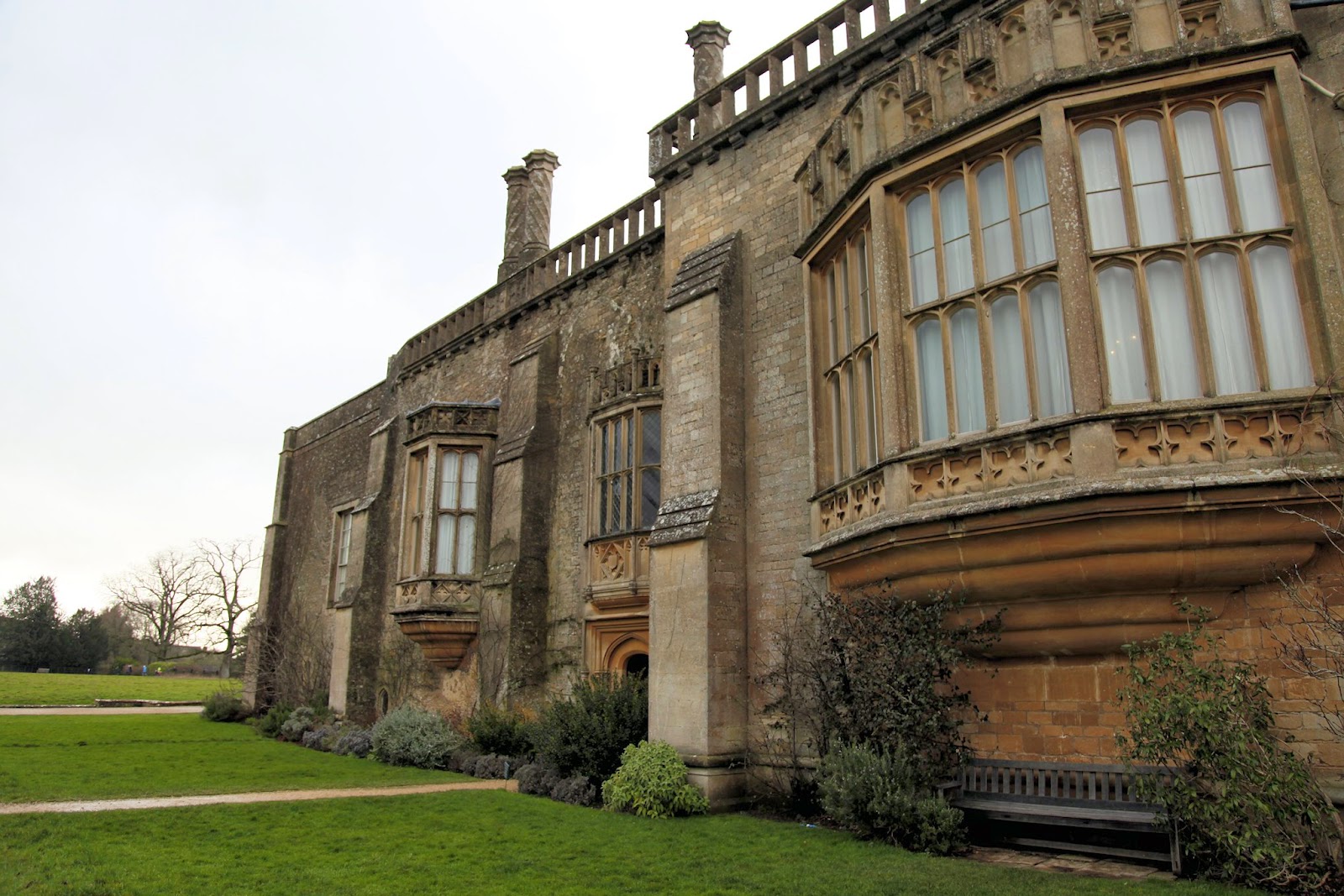



The impressive Abbey stands in the heart of an expansive woodland ground. Some of the interior still retain blocks of the original limestone. The cloister is airy and well lit, though not exceptionally big. In one of the rooms the original floor tiles are preserved. Several aspects of the outer wall and tower resonate with the Italian Renaissance, no doubt a reflection of Sir William Sharington's extensive travels. At the front entrance is a Gothic entrance hall that would certainly not have belonged to the original Abbey - it was the work of the last owner, John Ivory Talbot in the 18th century. Two of the Harry Potter movies were shot inside the Abbey!
The Abbey is a stunning construction set in the idyllic English countryside where one would least expect. While it is a pastiche of various architectural style seemingly joint together without much coherence, each piece represents and preserves a part of the history of this delightful building.
Less than 2 hours' drive from London or 40 minutes from Bristol, the Abbey and the village made for a perfect way to spend an afternoon.
About the village - http://ernestso.blogspot.co.uk/2014/03/lacock-historical-village-in-heart-of.html
On National Trust - https://www.nationaltrust.org.uk/lacock/
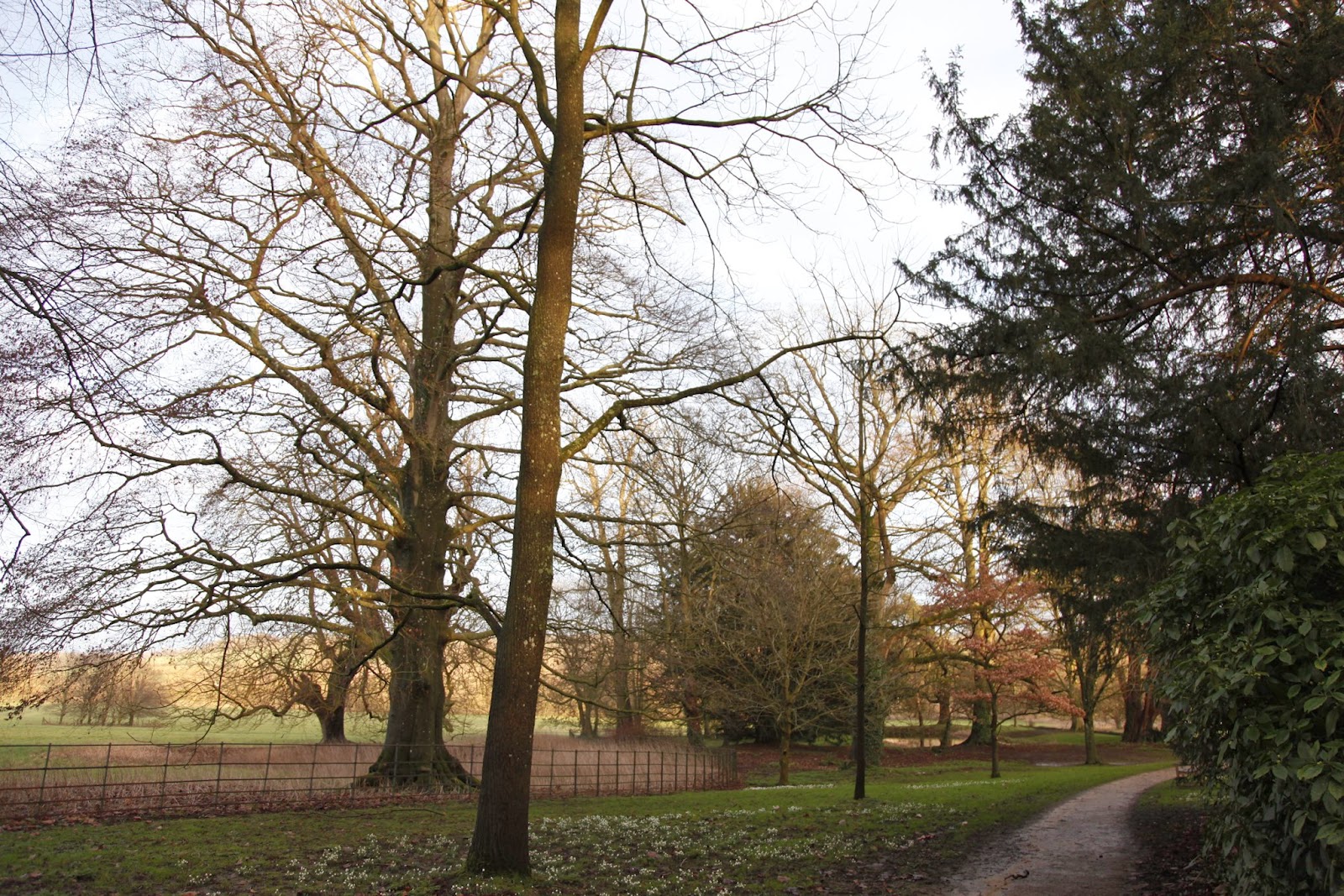
Surrounding garden and woodlands
Subscribe to:
Posts (Atom)